
Featured
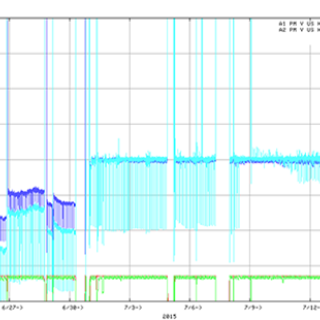
Horizontal beam stabilization for undulator beamlines at CHESS
Over the past few years CHESS has implemented and continually improved a vertical beam position correction program to reduce beam motion throughout each run as the beam decays as well as from run to run (see related article).
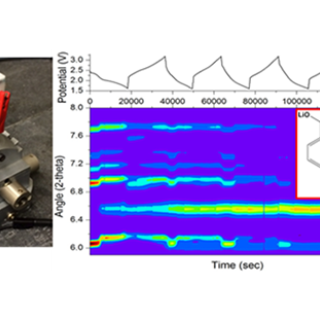
X-rays record structural changes inside lithium batteries
Organic molecules are proving themselves attractive and promising alternatives for electrical energy storage applications.
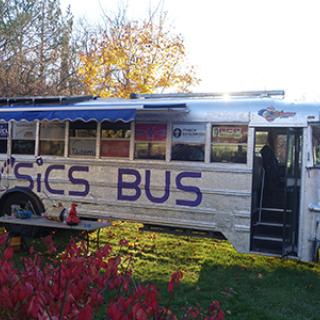
Today's "Junk Genies," tomorrow's engineers
Now into the fourth year of its JunkGenies programming, Xraise is paving the way when it comes to infusing engineering design practices into science outreach.
CHESS user fights fish disease
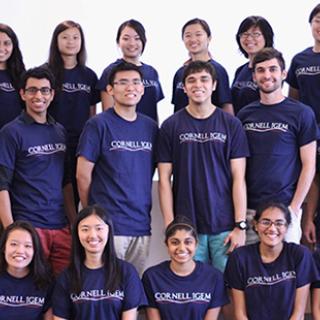
Michelle Zhang, an undergraduate student in biological and environmental engineering, and a frequent user at the CHESS Sample Environment Lab, was part of the Cornell iGEM team in this year’s competition.

A guest's perspective on outreach
The second week in August was a busy and productive week at Cornell University. Students from throughout the region traveled to campus to spend two days creating, building, teaming, designing, reflecting, learning, touring, asking questions and being junior engineers as part of the Cornell Summer Science Snapshot program.
Cornell synchrotron begins two-month X-ray run, receives mechanical upgrades
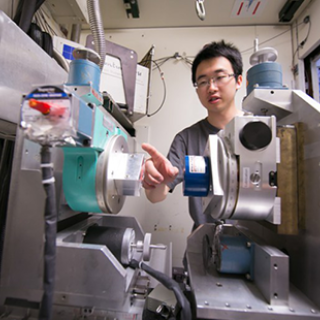
From last Wednesday to Dec. 8, the Cornell High Energy Synchrotron Source (CHESS), also known affectionately as the “world’s coolest microscope” by CHESS Director Prof. Joel Brock, applied and engineering physics, will be holding a scheduled x-ray run for users around the nation.

Argonne group sets record for largest x-ray dataset ever at CHESS
Station A2 this week is testing the boundaries of data acquisition, storage and retrieval here at the Cornell High Energy Synchrotron Source (CHESS) and the results are terabytes!
MacCHESS runs ACA course on small angle scattering
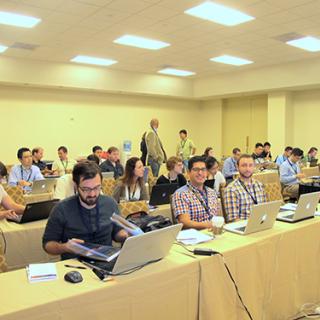
Following the successful BioSAS training workshop held at the 2013 American Crystallographic Association annual meeting, the ACA approved a new proposal from MacCHESS for a small-angle scattering workshop bringing together experts in both biology and soft matter.