Featured

A2: Out with the wigglers; in with the undulators
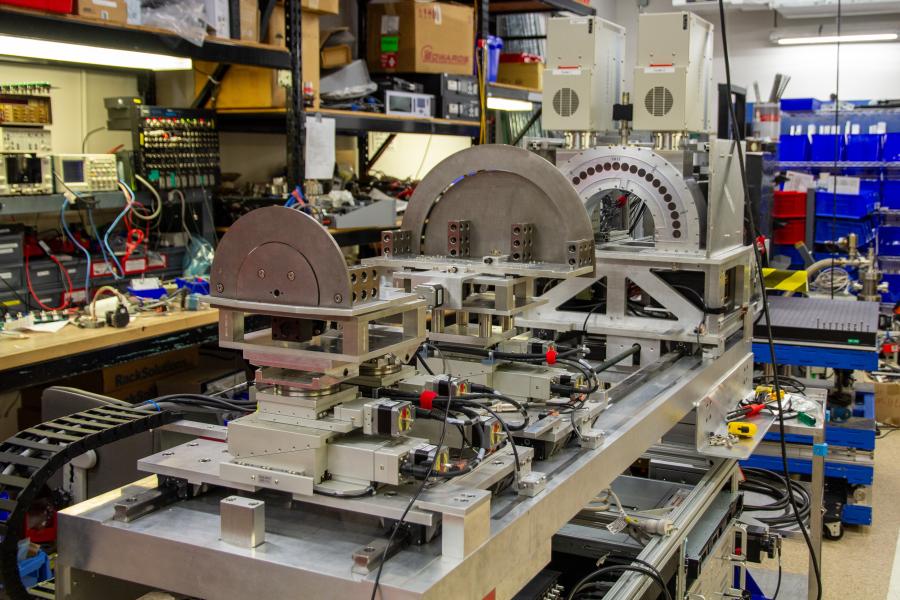
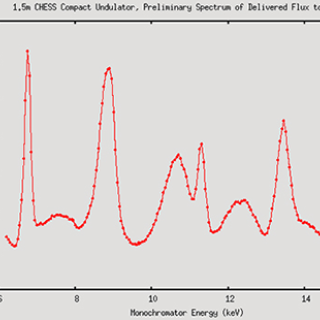
The CHESS West wiggler source was removed over the summer. In its place are two custom 1.5m CHESS Compact Undulators which now feed the A-line/G-line endstations.
Crystallography at A1: new detector for a new beam
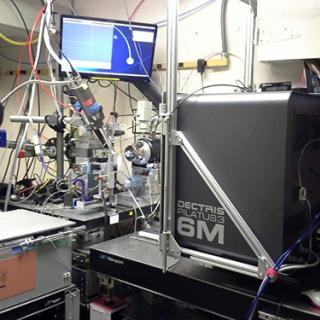
A Pilatus3 6M pixel array detector has replaced the Q-210 CCD detector in the A1 hutch.
Nanometer-scale chemical reactors based on binary nanocrystal superlattices
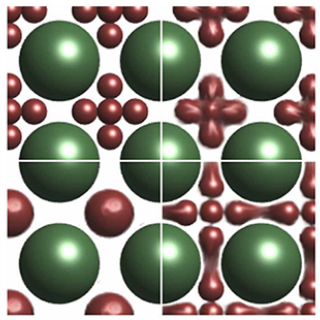
Imagine an octahedron inside a cube and then let’s put spheres on the corner of the cube. Now the octahedron is well enclosed inside the cube and also well-separated from octahedra in adjacent cubic unit cells.
Chemists show that ALS is a protein aggregation disease
Using a technique that illuminates subtle changes in individual proteins, chemistry researchers at Cornell have uncovered new insight into the underlying causes of Amyotrophic Lateral Sclerosis (ALS).
Synchrotron upgrade to make X-rays even brighter
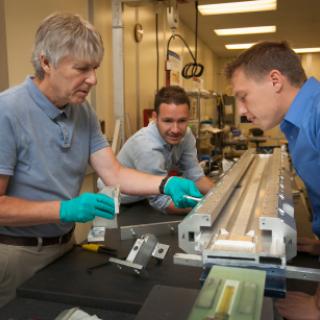
The X-rays produced by the Cornell High Energy Synchrotron Source (CHESS) are bright, but they will soon be even brighter, thanks to a major upgrade that will make the quality of CHESS’ X-rays competitive with the world’s best synchrotron light sources.
High school teachers learn to connect students with science
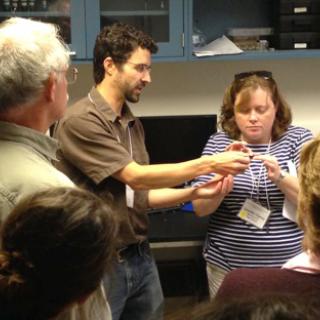
On a beautiful fall day, two dozen high school science teachers from across the state and beyond attended the Xraise Science Teacher Workshop, hosted at the eXploration station behind Wilson Synchrotron Laboratory.
Using strain to engineer growth of carbon nanotube microstructures
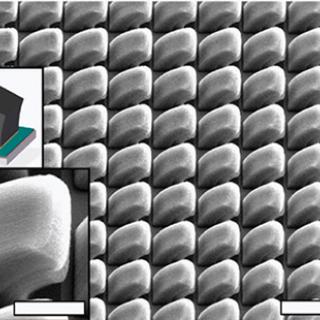
Materials in nature are often complex and ingenious, challenging scientists and engineers to mimic their functionality or try to improve upon effective and efficient solutions.
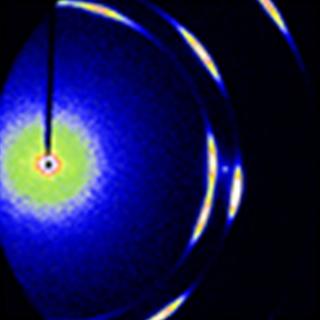
CHESS X-rays show how to grow crystals from crystals
Way too small to see, nanocrystals – tiny crystals that are at least 1,000 times smaller than the diameter of a human hair – exhibit unprecedented properties that intrigue scientists and engineers.