Featured
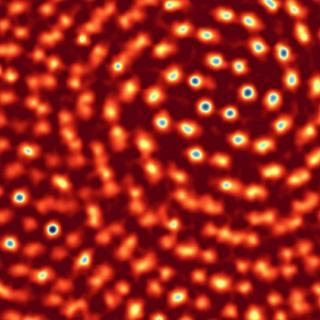
Guinness World Record for micro view into hidden worlds
In a recent research paper published in Nature, a group led by physics professors David Muller and Sol Gruner claimed a world record for electron microscope resolution using a high-powered detector and a technique called ptychography.
New study reveals the real-time dynamical response of asymmetric tilt during epitaxial thin film growth
Scientists have observed the real-time strain relaxation response of asymmetric tilt boundaries at the Bi/GaAs (110) interface, which could improve the production of high-quality epitaxial thin films for modern electronic devices.
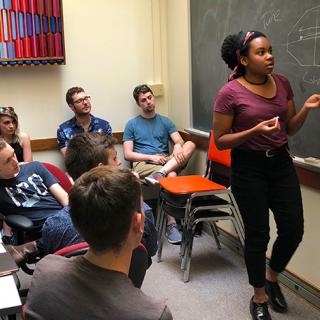
The impact of summer undergraduate research programs extends beyond the laboratory
Conducting research at a world class facility is no doubt a once-in-a-lifetime experience for any undergraduate student. By combining that research experience with meaningful peer-learning opportunities and dynamic outreach activities, a memorable summer of science inevitably occurs.
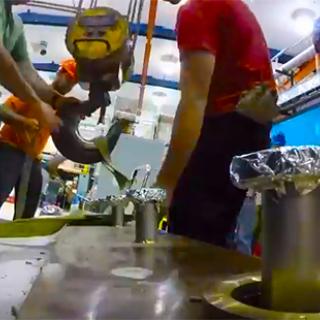
CHESS-U Week 1
The CHESS-U upgrade is underway. Associate Director Ernie Fontes explains how the team is already making progress, and looking forward to bringing in some new equipment.
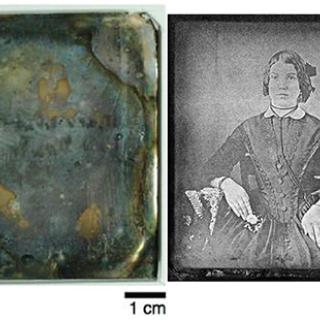
Recovering unrecognizably damaged 19th-century photographs with scanning x-ray fluorescence
Daguerreotypes, the earliest form of commercial photography, are made of silver-mercury image particles on silver-coated copper plates. These exquisitely detailed images can suffer from tarnish of the silver over time, obscuring the original photograph.
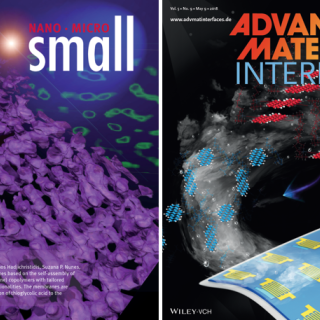
D-line going out with a bang!
During just the final half year of D-line operation in 2018, D-line users have published 19 articles in renowned journals on ex-situ and in-situ studies of soft materials.
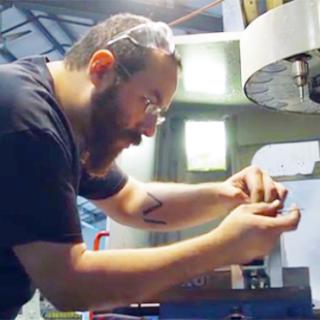
The machinist: A maker finds his calling in upstate New York
Join John Buettler, a machinist, as he shares the passion he brings to the job of helping to construct the Cornell High Energy Synchrotron Source (CHESS).
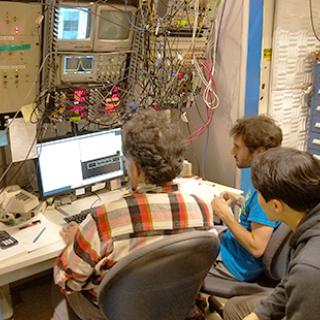
XES Workshop attracts remote participants from across the globe
In conjunction with the Users’ Meeting, CHESS also hosted the 2nd X-ray Emission Spectroscopic Methods Workshop.