
Featured

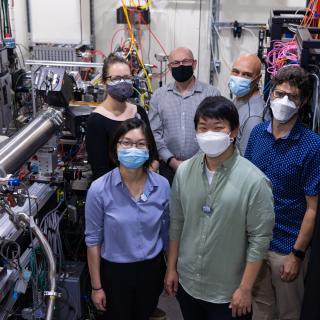
CHESS Welcomes Greg Ray as New Director of Strategic Partnerships
Greg Ray has been named the new Director of Strategic Partnerships at the Cornell High Energy Synchrotoron Source. In his role, Greg will work closely with the CHESS Director and Senior Leadership Team to provide strategic guidance, and interface with multiple partner organizations – creating and maintaining long-term relationships with external organizations and funding partners.
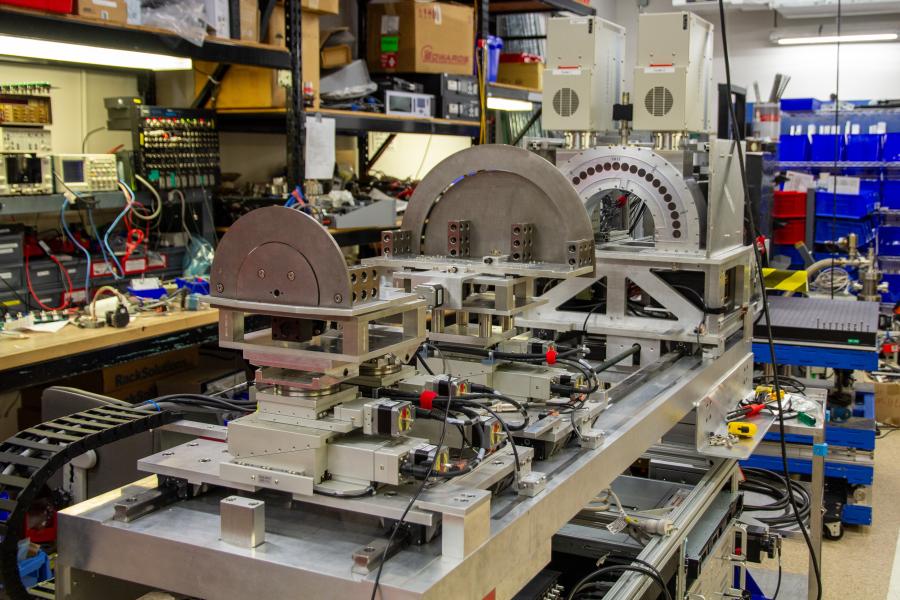
In situ SAXS/WAXS mapping of thermoplastic crystallization during 3D printing
AFRL and Boeing collaborate with CHESS to enable real-time measurements of high performance thermoplastics in 3D printing composites processing.
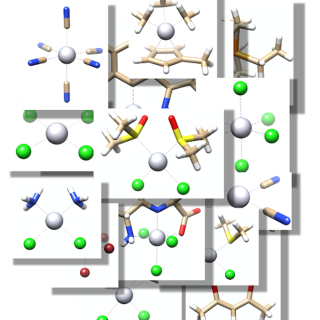
Assessment of DFT methods for geometry optimization of platinum-containing complexes
In a new publication, the team of Louise Debefve and Chris Pollock (both at the PIPOXS beamline at CHEXS) have evaluated 80 different DFT methods to reproduce the experimental geometries of Pt complexes, using a diverse training set of 14 platinum-containing species with varying sizes, oxidation states, and number and type of ligands.
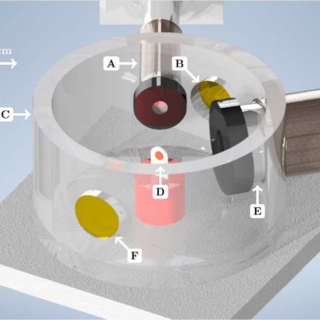
Testing for the Continuous Spectrum of X-Rays Predicted to Accompany the Photoejection of an Atomic Inner Shell Electron
Echoing classical physics, quantum electrodynamics predicts the release of a spectral continuum of electromagnetic radiation upon the sudden acceleration of charged particles in quantum matter. Despite apparent theoretical success in describing sister nuclear processes, known as internal bremsstrahlung, following nuclear beta decay and K capture, the situation of the photoejection of an electron from an inner shell of an atom, intraatomic bremsstrahlung (IAB), is far from settled.
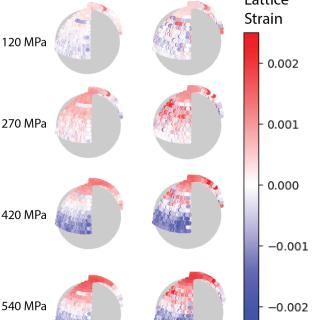
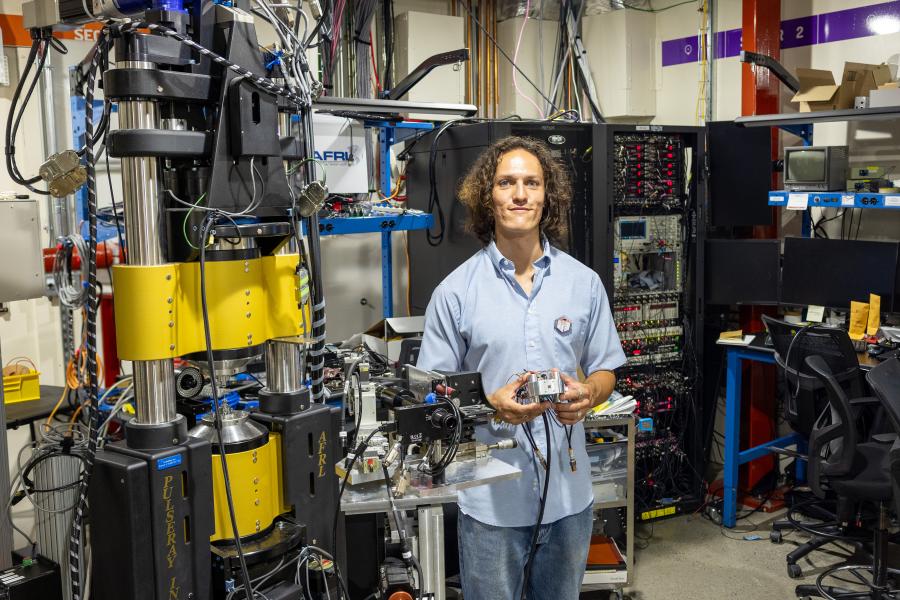
Phase-specific deformation in additively manufactured Ni–CrC composites
New in situ high-energy X-ray diffraction research using the FAST beamline tested cold-spraying in additive manufacturing. Researchers found a high concentration of manufacturing defects and that the load-bearing properties of the material can be improved via post-spray treatments.
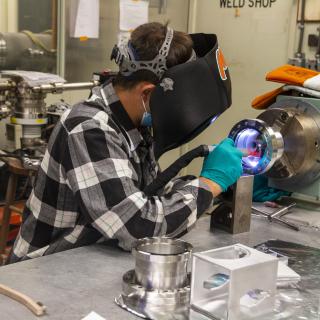
2021 Summer Shutdown Highlights
During the summer maintenance period, we made significant progress on a huge number of jobs. A few of the highlights include major upgrades to our power distribution infrastructure, upgrades to the linac and synchrotron RF power supplies, and repairs and maintenance to our cooling water systems. We also installed a new wide band-pass multilayer monochromator on the FAST beamline and new white beam slits for QM2. These projects promise to improve the performance and reliability of our systems.
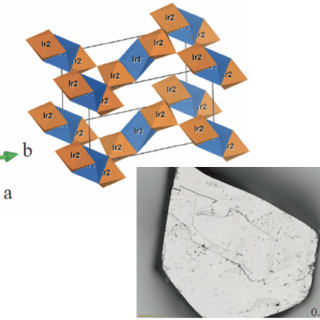
Structural and magnetic transitions in the planar antiferromagnet Ba4Ir3O10
New research based at the QM2 beamline reports detailed investigations of low temperature charge and magnetic superstructures in Ba4Ir3O10. Contrary to previous reports, the researchers discover a series of phase transitions to different long-range ordered states, without evidence of the proposed liquid-like magnetic correlations.

CHESS User receives Early Career Award from NSF
Philip Milner, CHESS user and assistant professor of Chemical & Chemical Biology at Cornell University, has received the National Science Foundation Faculty Early Career Development Award. This award supports early-career faculty “who have the potential to serve as academic role models in research and education and to lead advances in the mission of their department or organization,” according to the NSF website.